



The digital landscape is constantly evolving, and one of the most significant shifts in recent years has been the transformation of search engines from traditional keyword-driven systems to AI-powered, generative search models. In the past, businesses could rely on basic search engine optimization (SEO) practices to enhance their online visibility. But now, to remain competitive, companies must adapt to the rise of Generative Search Optimization (GEO), which requires a completely new approach to technical architecture.
In this blog, we’ll explore how SEO has evolved into GEO and provide a comprehensive blueprint for optimizing your website’s technical architecture to support both SEO and GEO, ensuring maximum search visibility in an increasingly AI-driven world.
Understanding SEO and GEO in the Modern Search Landscape
Before diving into the specifics of technical architecture, it’s important to understand the difference between SEO and GEO.
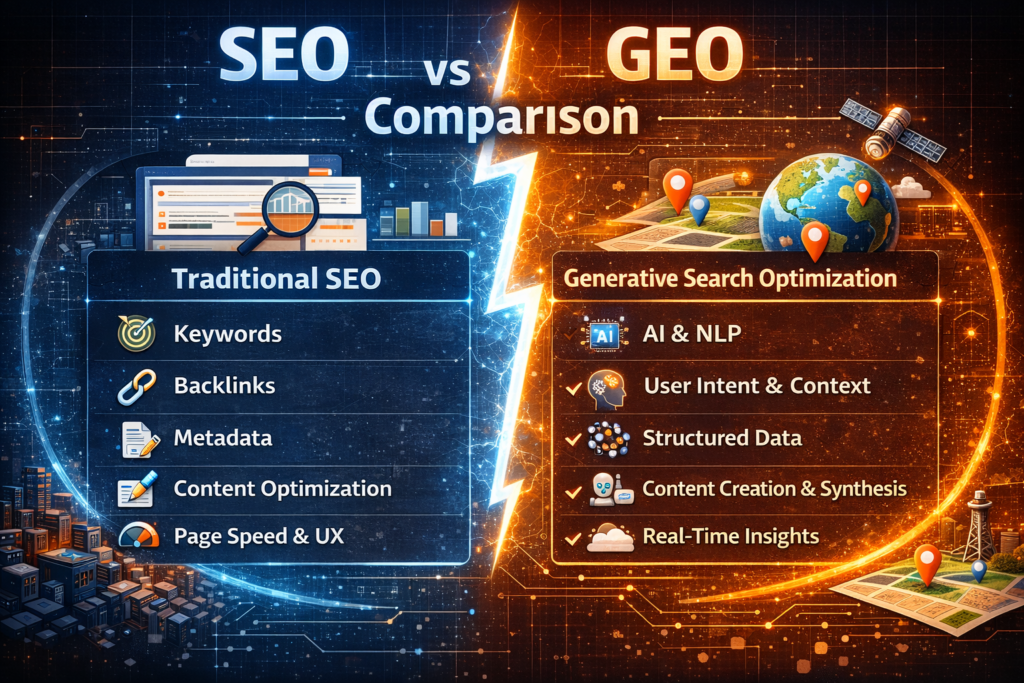
What is SEO?
SEO, or Search Engine Optimization, has long been the backbone of digital marketing. SEO is about optimizing websites so they rank higher in search engine results for relevant keywords. Core SEO practices focus on content relevance, backlinks, on-page optimization (like headers, meta tags, and keyword placement), site speed, and mobile-friendliness.
While SEO is crucial for traditional search engines, it focuses heavily on keyword-targeted content and structured data to drive traffic to your site.
What is GEO?
GEO (Generative Search Optimization) represents the new era of search. Powered by artificial intelligence (AI) and machine learning, generative search shifts away from keyword-centric results toward AI-generated, contextually relevant, and personalized results. Generative search engines, such as Google’s BERT, MUM, and GPT-based systems, understand user intent and context, providing more accurate and conversational answers rather than simple keyword matches.
Unlike traditional SEO, GEO is focused on understanding and predicting user intent, providing tailored content, and ensuring your website content can be interpreted by machine learning algorithms that power modern search engines.
Difference and Overlap Between SEO and GEO
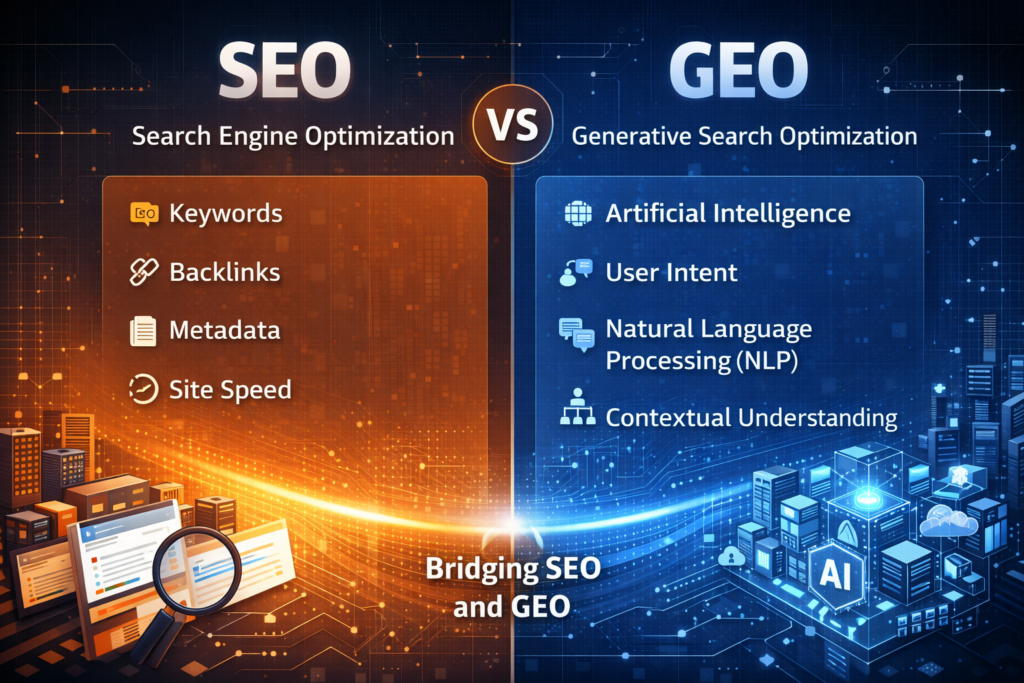
While SEO remains crucial for ensuring your website ranks well, GEO optimizes for more advanced AI features like natural language processing, personalization, and conversational interfaces. However, SEO and GEO often overlap, as both focus on making content accessible and understandable to search engines. The key difference lies in the complexity of the algorithms powering search results, with GEO focusing on AI-based context and personalization.
Technical Architecture for SEO – The Basics

Before diving into how you can structure your site for generative search, let’s cover the core technical principles needed to maintain solid SEO performance.
Core Technical SEO Principles
- Site Structure & URL Optimization: Clean, logical site architecture ensures that search engines can crawl and index your content efficiently. URLs should be short, descriptive, and keyword-optimized.
- Mobile-First Indexing: Since mobile traffic now accounts for the majority of online interactions, your site should be responsive and mobile-friendly. Google primarily uses the mobile version of your website for indexing and ranking.
- Page Speed & Performance Optimization: Search engines like Google use page speed as a ranking factor. A slow-loading website provides a poor user experience and can negatively affect your visibility.
- HTTPS & Security: Ensuring your website uses HTTPS (secure connections) is not just a security measure, but a ranking factor in SEO.
Accessibility: Your site should be accessible to all users, including those with disabilities. Accessible sites are more likely to be indexed well by search engines.
Crawlability and Indexability
Search engines need to be able to crawl and index your content to rank it properly. Structured data, sitemaps, and proper metadata (like title tags and alt texts for images) help ensure search engines can accurately interpret your site. Keep your URL structure clean and easy to navigate, and use robots.txt to guide search engines in crawling your pages.
Performance Metrics and Monitoring Tools
- Core Web Vitals: Google uses these metrics to assess user experience factors like loading performance, interactivity, and visual stability.
- Google Search Console: A powerful tool that helps you monitor your website’s performance, track indexing, and identify any issues that could affect your SEO.
The Rise of Generative Search and the Need for GEO
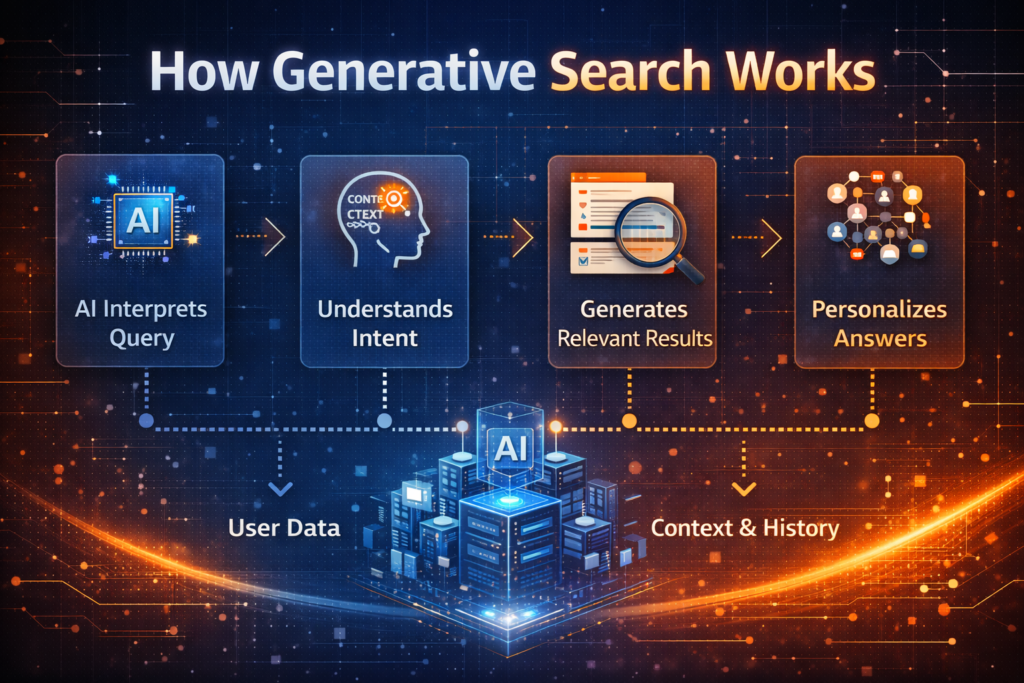
With the rise of AI and machine learning, search engines are no longer simply matching keywords to results. Instead, they use natural language processing (NLP) and deep learning algorithms to understand the context and intent behind queries. This shift to generative search changes everything about how search engines interact with content.
How Generative Search Works
Generative search engines use advanced AI models like Google’s BERT and MUM, and more recently GPT-based models, to comprehend complex search queries. These models are designed to understand the meaning behind words, phrases, and even entire sentences, rather than just matching them to a database of keywords. They can generate answers based on context, which is why results are becoming more personalized and dynamic.
Personalization and User Intent
Generative search leverages user data—such as search history, geolocation, and even browsing habits—to tailor results for a more personalized experience. The goal is to deliver the most contextually relevant content to the user, even if it doesn’t exactly match the query’s keywords. This means search engines can now deliver responses that feel more like human conversation, with answers adjusted to the user’s individual needs and preferences.
The Future of Search: Conversational Interfaces and Chatbots
Voice search and chatbots powered by AI are also becoming an integral part of generative search. Platforms like Siri, Alexa, and Google Assistant rely heavily on natural language processing (NLP) to interpret and respond to queries. As generative search evolves, conversational search will continue to grow in importance.
Bridging SEO and GEO – Building a Unified Technical Architecture
To succeed in both traditional SEO and emerging GEO, you must integrate strategies from both worlds. Your website’s technical architecture needs to be optimized for both keyword ranking and AI-powered search algorithms.
Unified Content Strategy
Your content should meet both SEO and GEO standards. It should be optimized for SEO through keyword-rich copy, but also be structured in a way that allows AI to understand the intent behind it. This means incorporating conversational tones, long-tail keywords, and context-rich content that can easily be interpreted by AI.
Schema Markup and Structured Data
Schema markup is a vital tool for both SEO and GEO. It provides search engines with detailed information about your content (like articles, events, reviews, and FAQs), improving how your content is presented in search results. It’s crucial for enabling rich snippets and helping AI-driven search engines comprehend your content more efficiently
Adaptive Content Delivery
Generative search engines thrive on content that adapts to user preferences. This means providing different formats of content—articles, videos, FAQs, etc.—and ensuring they are optimized for various devices and user contexts. AI can better interpret content that’s dynamic and flexible, adapting to the user’s search intent and preferences.
API Integrations and Dynamic Content
With the rise of generative search, real-time, dynamic content is more important than ever. Using APIs to feed search engines up-to-date data (such as stock prices, news updates, or live event results) is essential for optimizing visibility in generative search.
Key Technical Components for Generative Search Visibility
Natural Language Processing (NLP) and AI Optimization
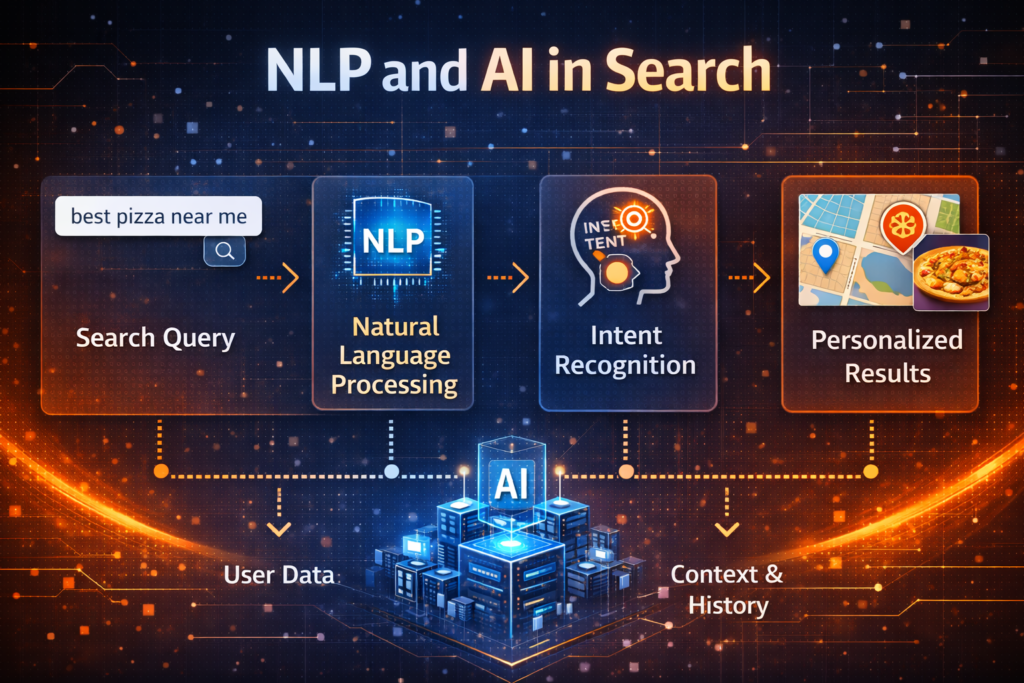
Understanding how generative search engines interpret language is crucial. Optimizing your content for machine learning models means using clear, conversational language, and anticipating the kinds of questions users might ask.
Data Layer and AI Models Integration
Behind every successful AI search engine lies a robust data infrastructure. Ensure your website’s back-end systems support AI models by structuring data in a way that’s accessible and usable for machine learning models.
Search Engine Collaboration: Structured vs. Unstructured Data
Generative search engines can process both structured data (like schema markup) and unstructured data (like blog posts or forum discussions). You should strive to provide both in a way that makes your content more interpretable by AI systems.
Best Practices for Implementing a Technical Architecture for GEO
Continuous Testing and Optimization
Both SEO and GEO require constant monitoring and optimization. Regularly use A/B testing to gauge how content and technical adjustments affect search visibility. Tools like Google Analytics and Google Search Console can provide insights into performance.
Machine Learning and AI Insights
Machine learning can be used to analyze user behavior and predict trends. Integrating machine learning models into your SEO strategy can help you stay ahead of the curve.
Collaboration Between SEO and AI Teams
Cross-team collaboration is essential for a cohesive strategy. SEO specialists, content creators, developers, and AI experts need to work together to create a unified plan that supports both traditional SEO and GEO.
Real-World Example: A Case Study
Take a look at how companies like Amazon and Netflix have successfully leveraged both SEO and generative search principles. By ensuring their content is optimized for both machine learning algorithms and human users, they maintain top rankings and high levels of engagement.
The Future of SEO and GEO
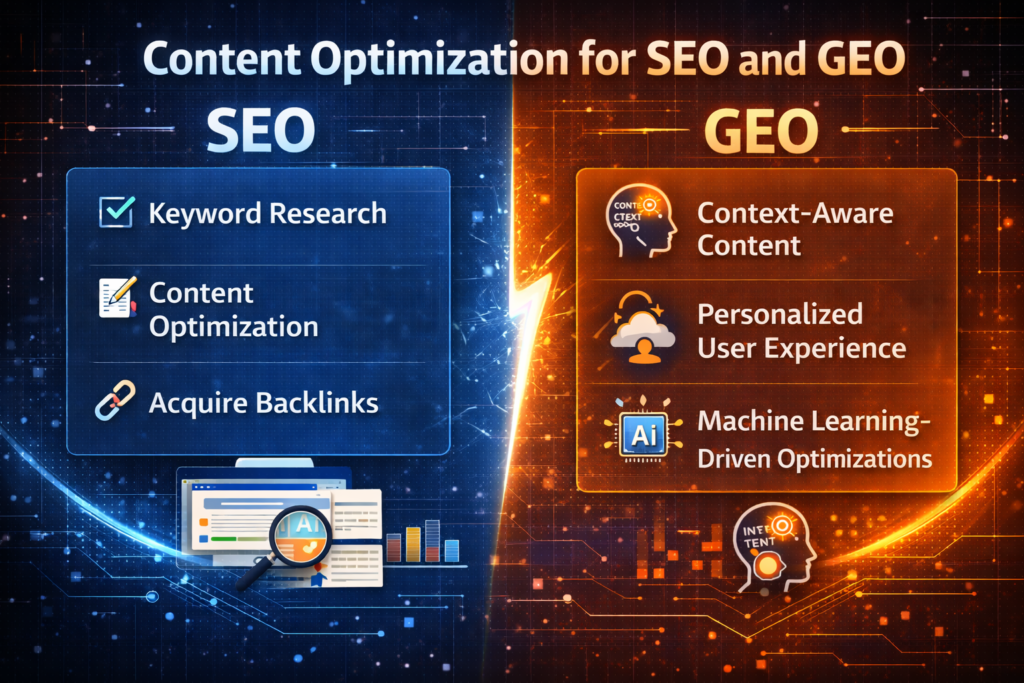
Evolving Search Trends
The future of search will continue to be dominated by AI and machine learning. As search engines evolve, companies will need to prioritize AI-based optimizations and focus on understanding user intent and context more than ever before.
Preparing for the Future: Key Takeaways
To prepare for the future of search, businesses must focus on a unified strategy that integrates both SEO and GEO. Understanding how AI and machine learning work, and designing your website architecture to accommodate these changes, will ensure you remain competitive in an increasingly complex digital world.
Conclusion
In the age of generative search, optimizing for both SEO and GEO is no longer optional—it’s essential. The key to achieving visibility in search results is building a technical architecture that supports both traditional SEO practices and the emerging trends of AI-driven generative search. By adopting a unified strategy that includes SEO-friendly content, advanced machine learning insights, and adaptive content delivery, you can future-proof your website’s search visibility and stay ahead of the competition.
Now is the time to assess your current SEO strategies and begin incorporating elements of GEO to ensure long-term visibility in both traditional and AI-powered search engines. Feel free to share your thoughts, questions, or experiences in the comments below—let’s start a conversation about optimizing for the future of search!